There’s this idea circulating that LLMs make software so easy to write that everyone will just build what they need. It has some terms like:
- Disposable software
- Highly bespoke software
- Personal software
- Vibe coded apps
I think it’s interesting, and still forming my opinions about it, but as of now I don’t feel that it will take off. There are many reasons why I feel that way, but I’ll just focus on two for this post.
1. What do I want?
People don’t know really what they want. For their whole lives, they’ve been consumers of the work of designers and developers, but haven’t been in the drivers seat. This by itself is enough to discourage a lot of people from entering.
If they do happen to know what they want, how far are they willing to take it to make it happen? I feel that most people don’t really “build” and “maintain” much in their free time. I’m not sure why they’d start making bespoke software now that generating a lot of code is easier.
2. Friction is everywhere
Software’s not that easy to debug. Things can go wrong in a million ways, and if you don’t have the vocabulary to describe what’s going wrong, how do you fix it?
In plenty of cases like a todo list website, this will be fully solved soon with tool use, even for those with very little vocabulary. Like, assistant uses playwright to see what “the red one looks big,” means exactly. So in a way, this world of everyone owning their own todo list site is possible. I just don’t see it being feasible because of every other point of friction.
Why would they do that? As I said, “what do I want,” and the friction around that is enough to stop most people before ever starting. For example, they actually want to use it on the go and now have to figure out hosting, or finally get their hosting working and now realize that their web pushes don’t work, etc. “Ugh, I’ll get to it tomorrow,” and then slowly never looking at it again seems more realistic than them sitting down and actually learning and debugging their todo list.
And this is just the trivial case. People also talk like big businesses are going to rip out and replace all SaaS enterprise subscriptions with a vibe coded internal project. Also doesn’t make much sense in most of these cases, like replacing monitoring, alerting, and on call processes that do their one thing well with some internal team’s solution. Now you have people managing and developing this thing that does not drive any revenue for the business, and if it goes down even once, might lose the year’s SaaS subscription savings.
Even if it does take off
If friction ends up not being a problem and software development and maintenance somehow becomes the new hobby for millions of people, I have the feeling it will remain mostly slop that goes disposable out of friction rather than after being done serving its purpose.
Being an expert in one area does not necessarily bring any expertise to others. So, if someone’s great at health and wants to build the next big health app, they’ll have to do quite a bit of learning. Friction, again! They could make it, but are they a good enough designer to not create a horrendous UX that they will actually prefer using over existing leaders? Probably not, but they might sit down and grind it out for a few weeks and give up after having a genuinely horrible time running into every edge case over time and getting annoyed with it.
More importantly, the “personal software” might be entirely misguided. Take a viral health tracking example by Karpathy from a few days ago:
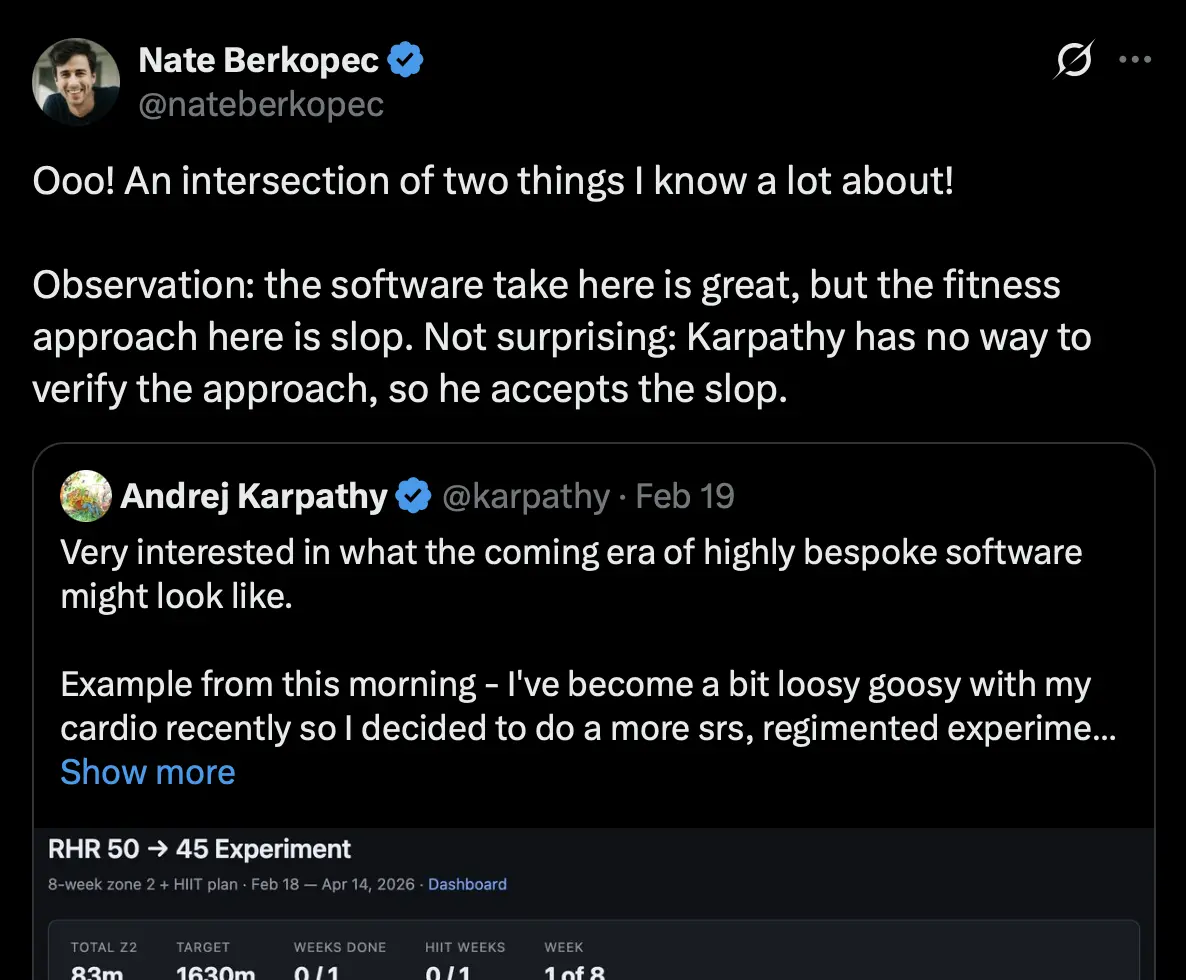
So, someone can make a cool looking dashboard, and even use it like something disposable, but it’s worth little if you don’t have the vocabulary or expertise to evaluate its usefulness or effectiveness. If you don’t take the time to first know what to make, then answer the hard questions about what success actually looks like, and finally give it lots of love and care, it’ll likely be worse, less accurate, and less helpful than a solution that’s gone through all of the research and built for the common edge cases. In this case, it’s a cool health dashboard, but tracking the wrong things entirely. Possibly cool, but not actionable, and arguably defeats the entire purpose of having the dashboard.
I do think that software creation will increase substantially over time where there are more people creating and maintaining things. There are already great cases for this right now for non-technical people with one-off automations, like data visualization, making one time scripts, etc. But I don’t see how we’ll ever go into personal apps territory where people “describe an app,” and then actually ever use it for more than a few days before giving up on it. And it’s not even because of AI capabilities necessarily, it’s just our own avoidance of friction.
Comments
Loading comments...